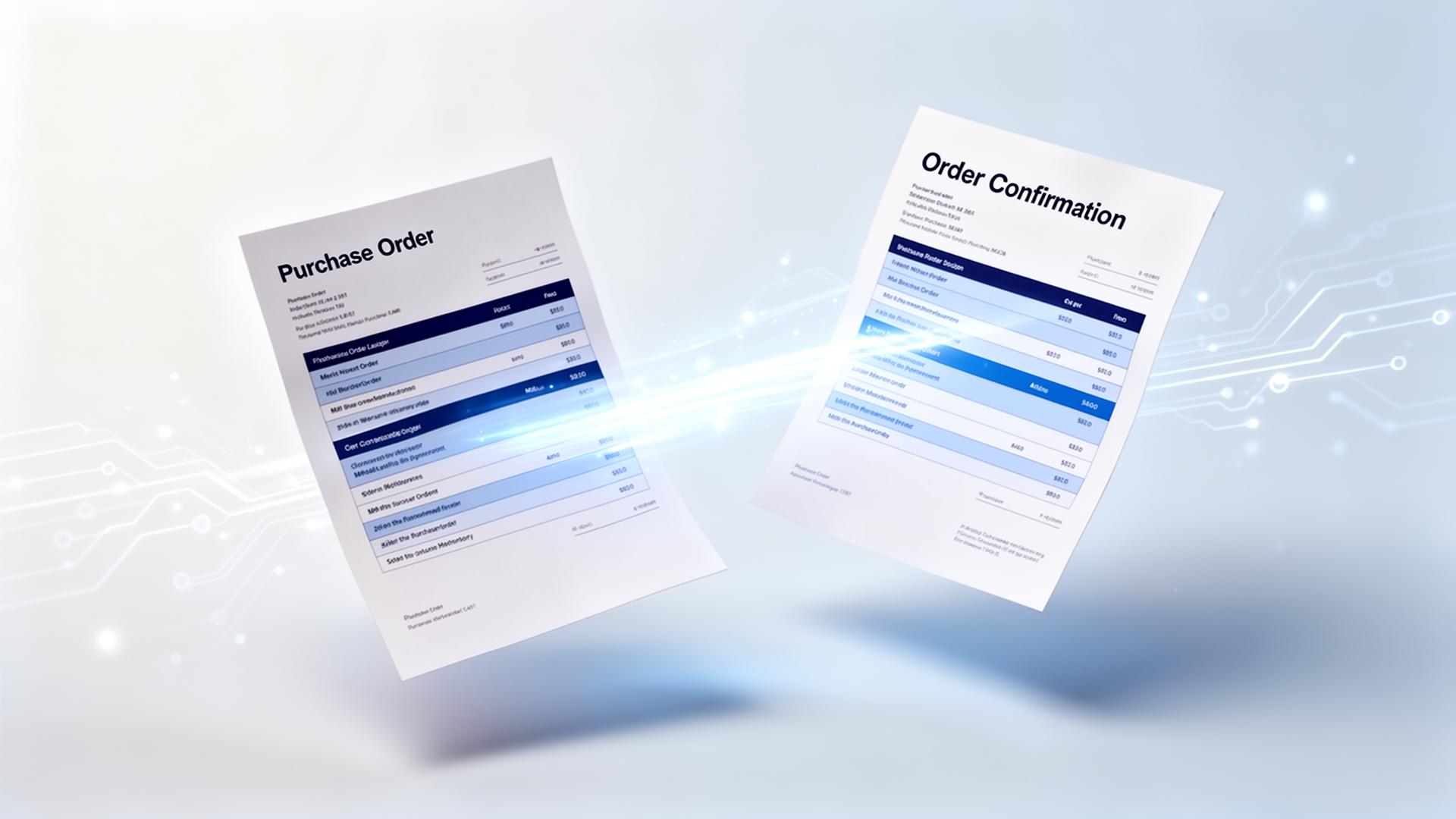

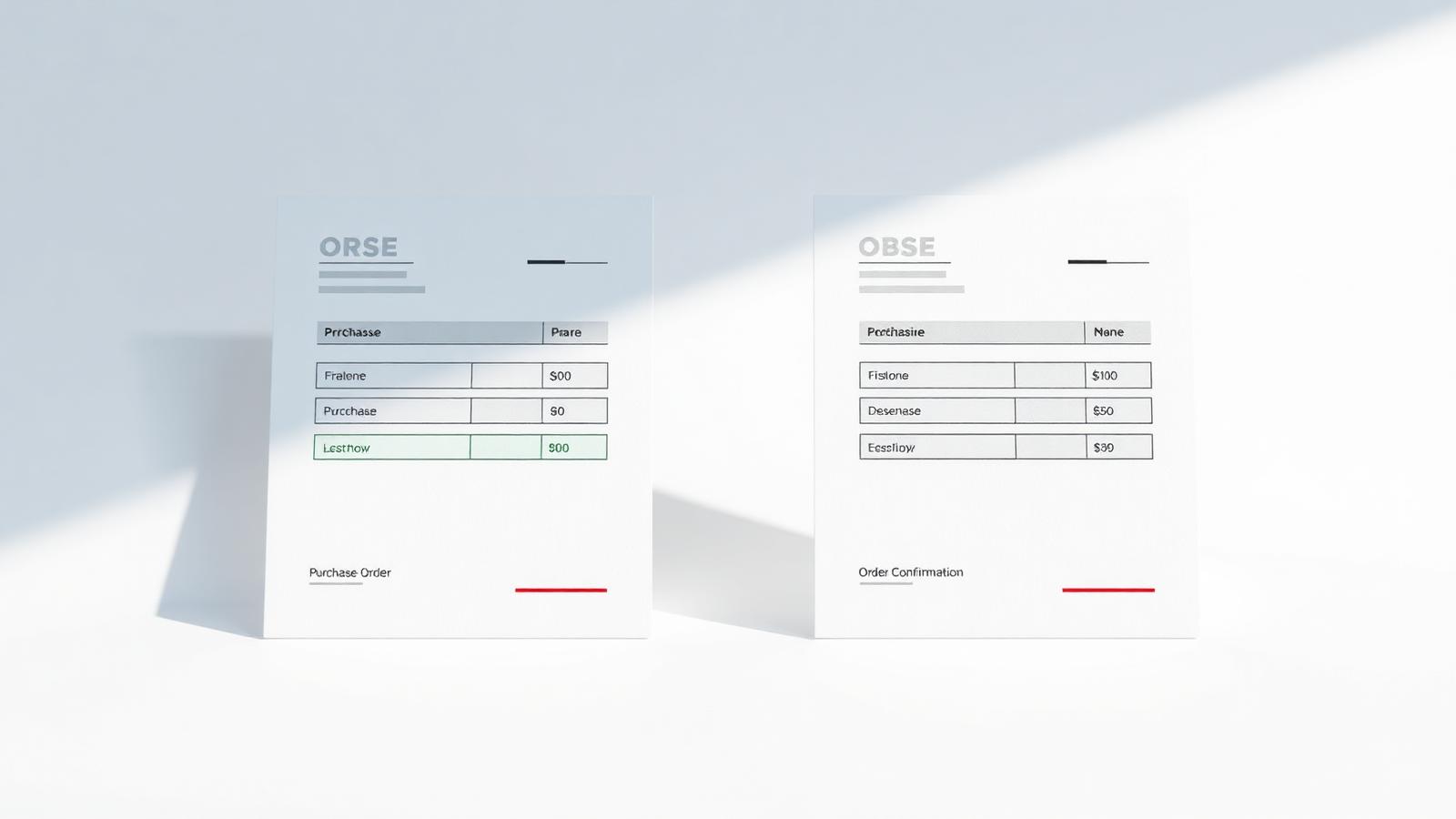
In manufacturing and wholesale, an order confirmation is not just a receipt; it is a legally binding commitment that dictates the health of your supply chain. When discrepancies between your purchase order and the supplier's confirmation go unnoticed, the result is always friction—incorrect invoices, wrong stock levels, or missed production deadlines.
The hidden cost of manual reconciliation
Most procurement teams spend hours every week cross-referencing PDFs against their ERP records. This manual process is prone to fatigue-driven errors. If a supplier changes a delivery date or a unit price and it isn't caught immediately, the ripple effect reaches your warehouse, your production line, and eventually, your customer's doorstep.
Why standard OCR fails the matching test
Traditional Optical Character Recognition (OCR) tools are excellent at turning pictures into text, but they lack the context required for validation. OCR can see the number '120', but it doesn't understand if that represents a price, a quantity, or a part of an address. Effective matching requires GenAI that understands the semantic relationship between a Purchase Order (PO) and an Order Confirmation (OC).
Common discrepancies to monitor
- Price variances: Even a few cents of difference per unit can erode margins on high-volume runs.
- Partial deliveries: Suppliers often confirm only a portion of the requested quantity.
- Date shifts: A two-day delay in a raw material arrival can stall an entire manufacturing shift.
- Unit of Measure (UoM) errors: Confusing 'boxes' with 'individual units' often leads to massive overstocking.
Automating the validation workflow
By leveraging GenAI, ENTR extracts data from incoming emails and PDF confirmations without the need for rigid templates. It compares this data against the open PO in your ERP. If the data matches within your pre-defined tolerances, the system updates the ERP automatically. If there is a mismatch, the procurement officer receives a pinpointed alert highlighting exactly what changed.
Bridging the gap between procurement and finance
When order confirmations are matched accurately at the start of the process, 3-way matching during the invoicing stage becomes a formality rather than a headache. By catching errors at the confirmation stage, you prevent the 'firefighting' mode that typically occurs when Finance finds a price discrepancy three weeks after the goods have been consumed.
| Aspect | Manual / status quo | With ENTR |
|---|---|---|
| Processing Speed | 5-15 minutes per document | Under 30 seconds |
| Data Extraction | Manual typing and template setup | Zero-template GenAI extraction |
| Discrepancy Detection | Visual spot-checking | Automated field-by-field validation |
| ERP Integration | Manual data entry after checking | Real-time automated updates |
| Scalability | Requires more staff as volume grows | Scales infinitely without extra overhead |
| Error Rate | High (human fatigue) | Near-zero (algorithmic precision) |
Reducing lead time volatility
Automated matching ensures that the 'Planned Delivery Date' in your ERP reflects reality. This visibility allows logistics managers to adjust production schedules in real-time. Instead of discovering a delay when the truck isn't at the dock, you know the moment the supplier sends their confirmation. This proactive approach saves between 15% and 40% of the time typically lost to logistical firefighting.
Reliable order confirmation matching is the foundation of a resilient supply chain. By removing the manual burden of reconciliation, companies can shift their focus from data entry to strategic supplier management.