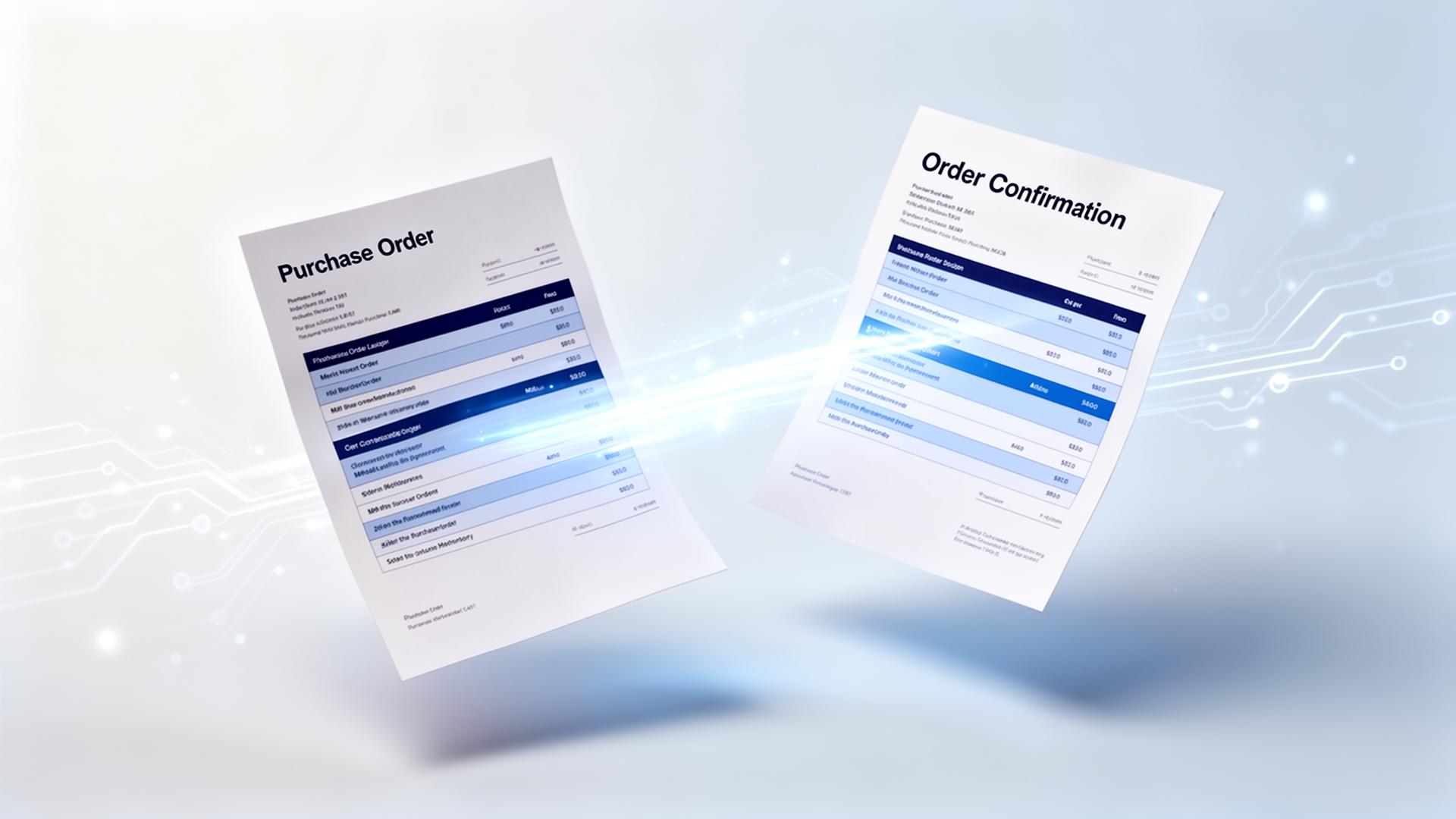


Manual sales order entry is a silent bottleneck that drains the productivity of sales support teams. While traditional OCR tools promised a solution, they often fail when faced with non-standard layouts, handwritten notes, or complex line items. Generative AI (GenAI) offers a new approach that understands context instead of just reading characters.
The hidden cost of manual order entry
For manufacturers and wholesalers, orders arrive in various formats: PDFs, Excel sheets, and even long email threads. When a sales representative spends three to five minutes re-typing data from a customer document into an ERP, they aren't just performing a low-value task; they are introducing a margin for error. A single typo in a SKU or quantity can lead to incorrect shipments, costly returns, and strained customer relationships.
Why traditional OCR falls short
Most companies have experimented with Optical Character Recognition (OCR). The problem is that OCR is rigid. It relies on templates. If a customer changes their invoice layout or adds a comment like "deliver after 2 PM," the system breaks or ignores the instruction. Teams end up spending more time fixing OCR errors than they would have spent typing the order from scratch.
How GenAI changes the processing workflow
GenAI doesn't look for data in specific coordinates on a page. It reads the document like a human does. It understands that 'Qty' and 'Amount' refer to quantities, regardless of where they are placed. This allows for a flexible workflow where the system extracts data, validates it against your ERP master data (like product codes and pricing), and flags only the exceptions for human review.
Key benefits of AI-driven automation:
- Zero templates: Handle orders from new customers instantly without configuration.
- Contextual awareness: Recognize special instructions hidden in email bodies or footers.
- ERP Integration: Seamlessly push validated data into systems like SAP, Microsoft Dynamics, or AFAS.
| Aspect | Manual / status quo | With ENTR |
|---|---|---|
| Processing Time | 5-10 minutes per order | Seconds (70-90% time saved) |
| Accuracy | Prone to human typos | High precision with ERP validation |
| Scalability | Requires more staff as volume grows | Handles spikes without extra headcount |
| Complex Layouts | Manual adjustment needed | Native handling of unstructured data |
| Cost per Order | High (labor intensive) | Significantly reduced |
Reducing the 'Time to Confirmation'
Customer experience in B2B is increasingly defined by speed. A customer who sends an order at 9:00 AM expects a confirmation by 9:05 AM. When order processing is automated, the confirmation loop happens almost instantly. This not only satisfies the customer but also allows the warehouse to start picking and packing earlier in the day, optimizing the entire supply chain.
From data entry to exception management
The goal of AI in sales operations is not to replace the sales support team, but to change their role. Instead of being data entry clerks, they become exception managers. They only intervene when the AI detects a discrepancy—such as a price mismatch or an out-of-stock item. This shift allows the team to focus on proactive customer service and upselling rather than administrative drudgery.
Implementing GenAI for sales order processing is no longer a futuristic concept; it is a practical necessity for companies looking to scale without proportional increases in overhead. By removing the manual barrier, businesses can ensure that their data is clean, their customers are happy, and their operations are lean.