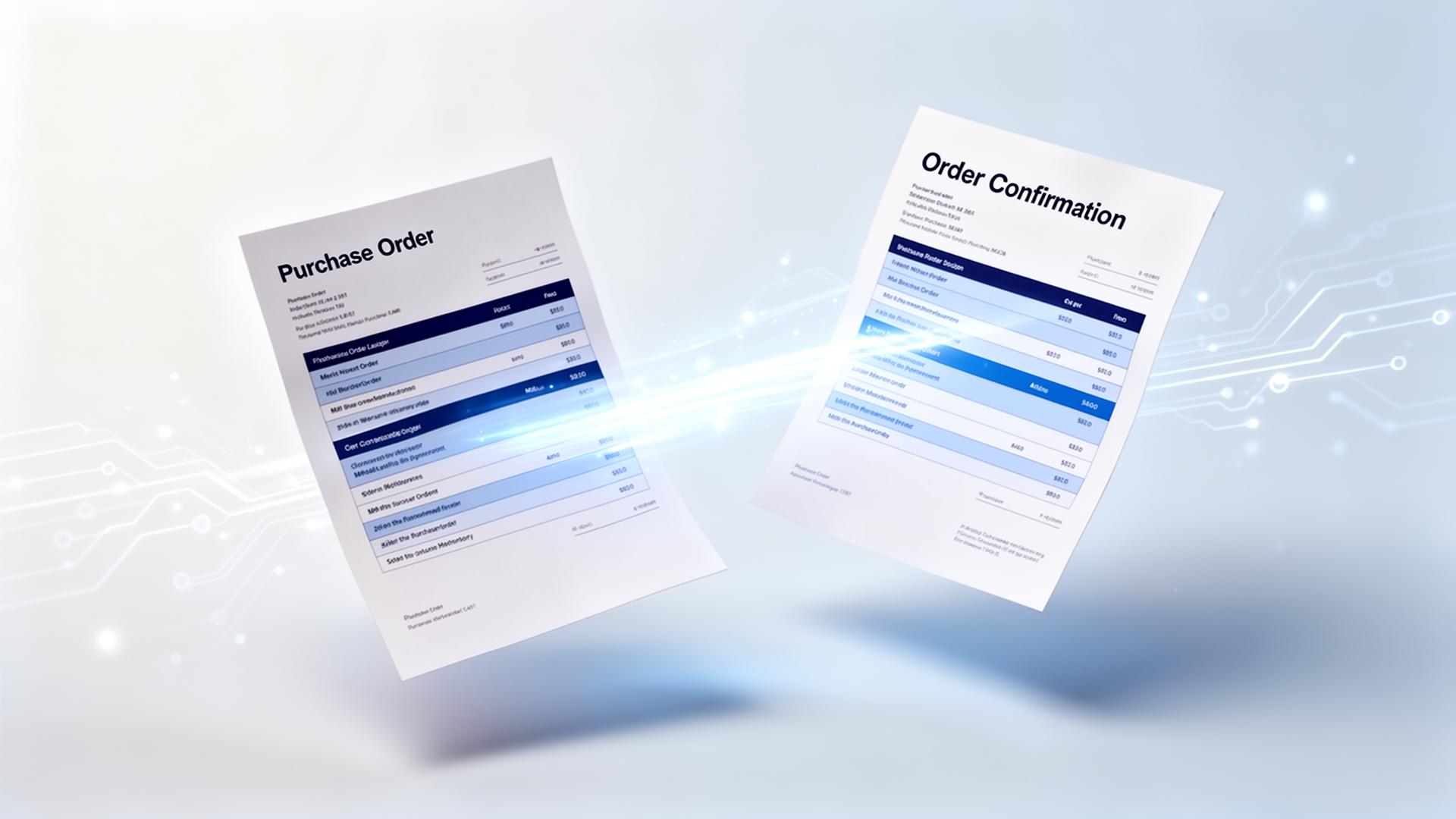

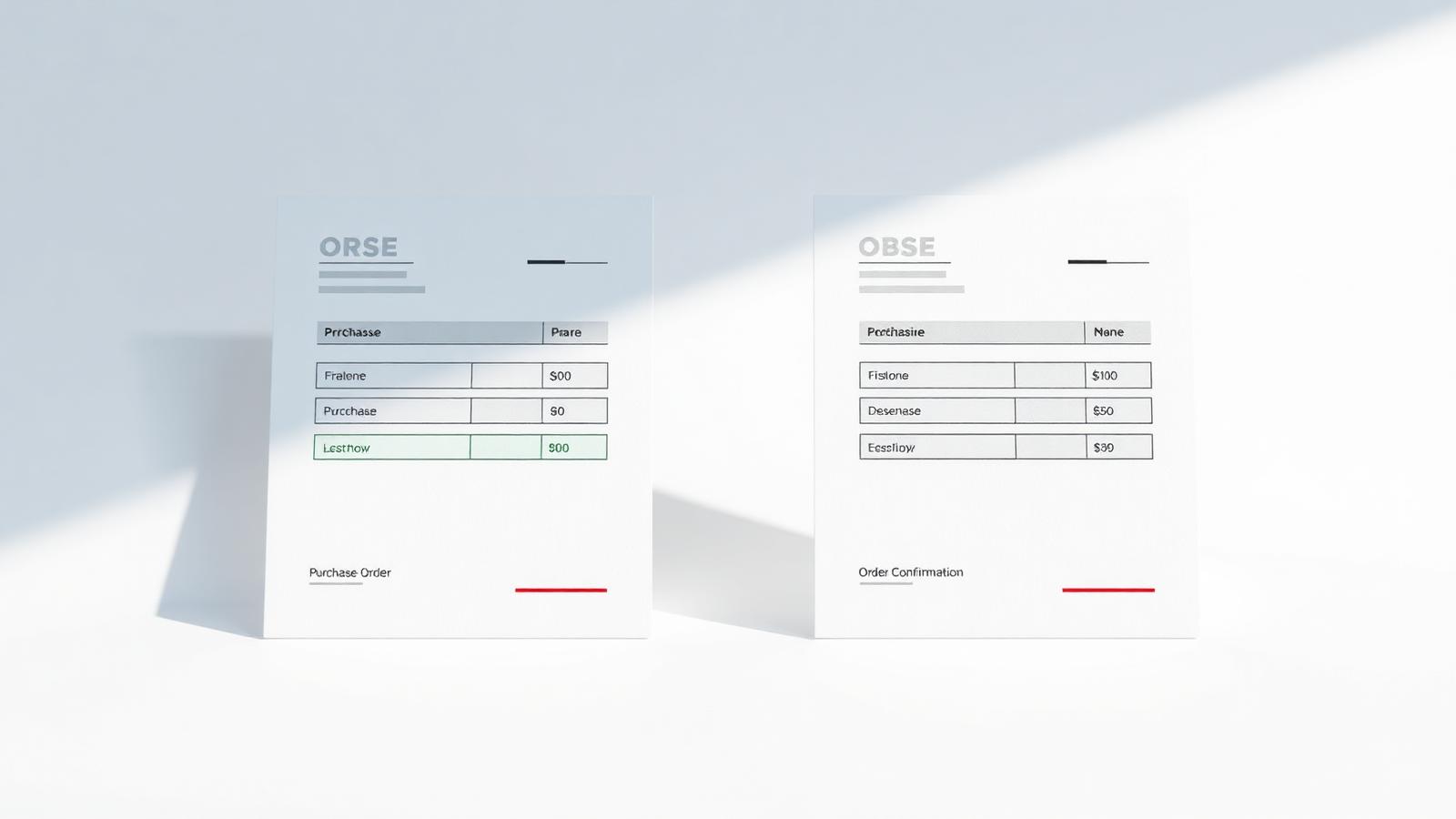
Manual order confirmation matching is a silent productivity killer in manufacturing and wholesale. When suppliers send back confirmations that don't align with your original purchase order, the resulting discrepancies in price, quantity, or delivery dates lead to supply chain bottlenecks and payment friction.
The hidden cost of manual verification
In most operations, a purchasing agent spends hours every week opening PDF confirmations and comparing them line-by-line against the ERP system. This process is prone to human error. A missed price increase or a subtle change in a delivery date might not be noticed until the invoice arrives or, worse, when the production line stops because a critical component didn't arrive as expected.
By the time a discrepancy is caught manually, it is often too late to negotiate or find an alternative. This reactive approach forces teams into constant fire-fighting mode rather than strategic sourcing.
Why OCR is no longer enough
Standard Optical Character Recognition (OCR) technology frequently fails at order confirmation matching. OCR can read text, but it doesn't understand the context of a back-ordered item or a split shipment. If a supplier confirms 50 units for Monday and 50 units for Friday against a single order of 100, traditional tools often flag this as a simple error.
Generative AI (GenAI) changes this dynamic. It understands the intent and the structure of the data, allowing it to reconcile complex delivery schedules and unit-of-measure conversions without manual intervention.
Closing the loop in the ERP
The ultimate goal of matching is to ensure your ERP reflects reality. Automated systems should not just flag errors; they should update the ERP automatically when the data matches predefined tolerances. This ensures that production planning and sales teams are always working with accurate lead times and cost data.
| Aspect | Manual / status quo | With ENTR |
|---|---|---|
| Processing Speed | 5-10 minutes per document | Seconds per document |
| Data Accuracy | High risk of human oversight | 99%+ accuracy via GenAI |
| Discrepancy Handling | Manual flagging and emailing | Automated alerts and workflows |
| ERP Integration | Manual re-typing of dates/prices | Direct, automated sync |
| Scalability | Requires more staff as volume grows | Scales infinitely without extra headcount |
Reducing supplier friction
Automated matching also improves supplier relationships. Instead of contacting a vendor weeks later about a price mismatch, AI identifies the issue the moment the confirmation is received. This allows for immediate resolution, ensuring that the partnership remains transparent and that invoices are paid on time without disputes.
Moving from manual checks to an automated workflow typically saves teams 70-90% of the time previously spent on administrative document handling, allowing purchasing managers to focus on vendor performance and cost optimization.