

Traditional Optical Character Recognition (OCR) has been the industry standard for decades, yet operations managers still spend hours fixing errors. While OCR turns images into text, it lacks the 'intelligence' to understand context, leading to broken workflows when a customer changes a layout. Generative AI is shifting the paradigm from simple character recognition to true document understanding.
The Fundamental Flaw of Template-Based OCR
Most legacy systems rely on templates. You tell the software exactly where the 'Order Number' or 'VAT ID' is located on a specific PDF. This works perfectly until a supplier adds a new logo, moves a column, or sends a multi-page document where the totals shift. For wholesalers handling hundreds of different formats, maintaining these templates becomes a full-time job.
How GenAI Contextualizes Data
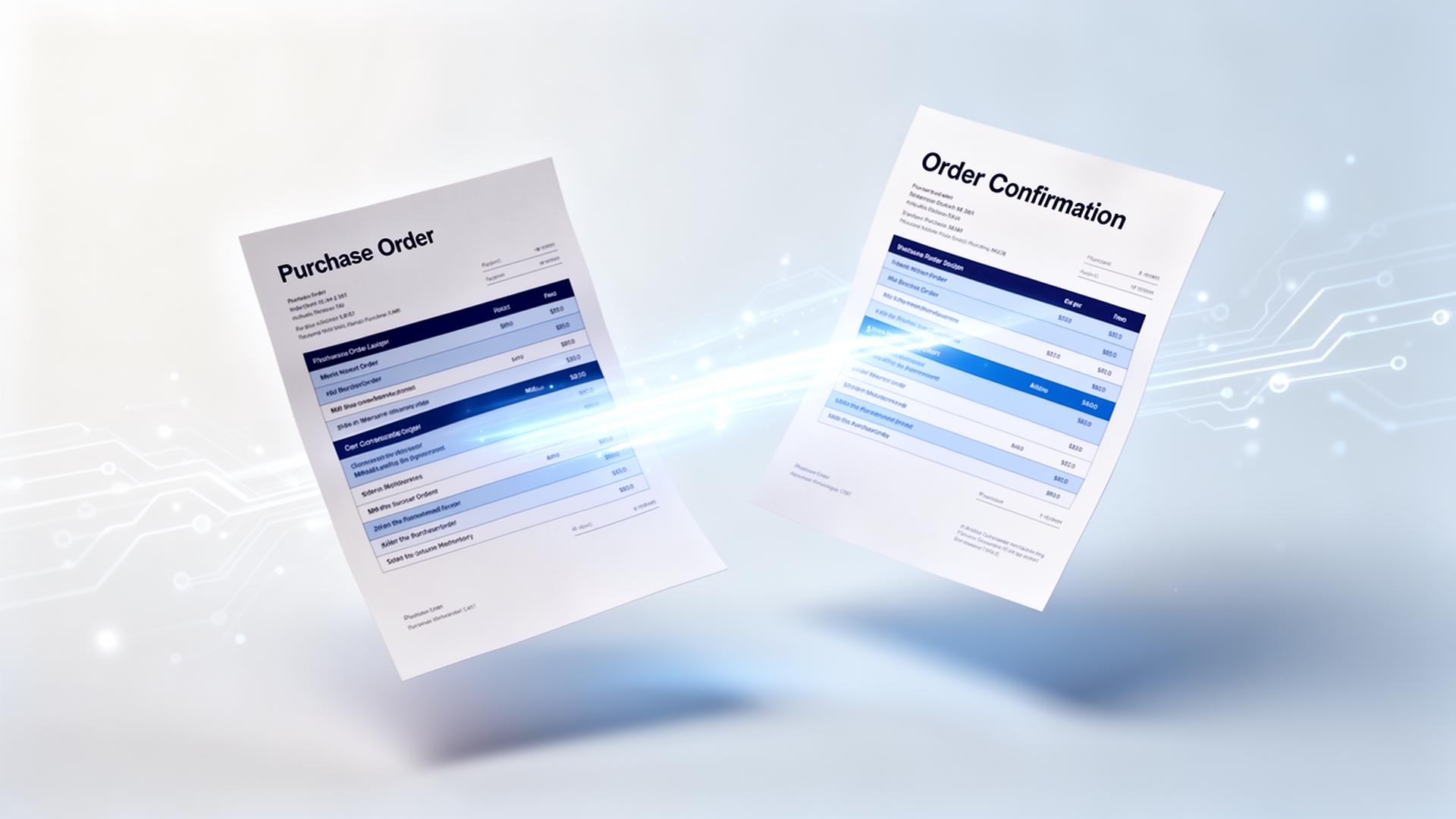
Unlike OCR, which looks for pixels in a specific coordinate, AI models trained on business logic read a document like a human does. It understands that 'Qty', 'Amount', and 'Stuks' all refer to quantity depending on the language and context. This eliminates the need for rigid mapping and allows for 70-90% time savings in manual data entry, even when encountering a layout for the first time.
Handling Complexity: Line Items and Handwriting
One of the biggest pain points in manufacturing and logistics is complex line-item extraction. When an order contains twenty different SKUs with varying descriptions, traditional OCR often loses the grid alignment. AI-driven systems excel here by identifying the underlying structure of the data, ensuring that every SKU is matched correctly to your ERP system without manual intervention.
| Aspect | Manual / Legacy OCR | With ENTR (GenAI) |
|---|---|---|
| Setup Time | Hours per new document template | Zero templates; instant start |
| Accuracy | High for text, low for context | High context-aware precision |
| Layout Changes | Breaks the automation | Adapts automatically |
| Handwritten notes | Often unreadable | High recognition rates |
| Language Support | Requires specific OCR packs | Native multi-language support |
Reducing the 'Exception Queue'
In a typical OCR workflow, 'exceptions'—documents the system couldn't read—often represent 30% of the volume. These exceptions land back on the desks of your sales or purchasing team. By utilizing GenAI, the exception rate drops significantly because the system isn't tripped up by a slightly blurry scan or a shifted table header. This allows your team to focus on high-value tasks rather than data correction.
Scalability Without Overhead
For growing wholesalers, scaling with OCR usually means hiring more 'template managers' or IT support. Modern AI solutions scale horizontally. Whether you process 1,000 or 100,000 documents a month, the system maintains its performance without requiring a proportional increase in human oversight. This makes GenAI not just a technical upgrade, but a strategic business advantage.
Choosing between AI and OCR is no longer about simple character recognition; it is about how much manual intervention your team can afford to eliminate. While OCR served its purpose for static forms, the dynamic nature of modern B2B trade requires the flexibility that only GenAI can provide.